

Heart Disease:
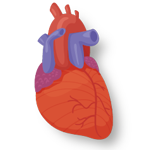
Heart disease is any disorder that affects the heart's ability to function normally. The most common cause of heart disease is narrowing or blockage of the coronary arteries, which supply blood to the heart itself. This happens slowly over time.
Heart Surgery:
Coronary Artery Bypass
This is the most common kind of heart surgery. The surgery involves sewing a section of vein from the leg or arteries from the chest or another part of the body to bypass a part of a diseased coronary artery. This creates a new route for blood to flow, so that the heart muscle will get the oxygen-rich blood it needs to work properly.
During bypass surgery, the breastbone (sternum) is divided, the heart is stopped, and blood is sent through a heart-lung machine. Unlike other kinds of heart surgery, the chambers of the heart are not opened during bypass surgery.
Valve repair or replacement
Blood is pumped through your heart in only one direction. Heart valves play key roles in this one-way blood flow, opening and closing with each heartbeat. Pressure changes behind and in front of the valves allow them to open their flap-like "doors" (called cusps or leaflets) at just the right time, then close them tightly to prevent a backflow of blood.
Two of the most common kinds of valve problems that require surgery are
- Stenosis, which means the leaflets do not open wide enough and only a small amount of blood can flow through the valve.
- Regurgitation, which is also called insufficiency or incompetence, means that the valve does not close properly and blood leaks backward instead of moving in the proper forward direction.
Arrhythmia Surgery
Any irregularity in your heart's natural rhythm is called an arrhythmia. Arrhythmias are usually treated first with medicines. Other treatments may include
- Electrical cardioversion, where the cardiologist or surgeon uses paddles to "shock" the heart back into a normal rhythm.
- Catheter ablation, where the cardiologist uses a special tool to destroy (ablate) the cells that are causing the arrhythmia.
- Pacing and rhythm-control devices, including pacemakers and implantable cardioverter defibrillators.
Aneurysm Repair
An aneurysm is a balloon-like bulge in a blood vessel or in the wall of the heart. An aneurysm occurs when the wall of a blood vessel or the heart becomes weakened. Pressure from the blood forces it to bulge outward, forming what you might think of as a blister. An aneurysm can often be repaired before it bursts.
Surgery involves replacing the weakened section of blood vessel or heart with a patch or artificial tube.
Transmyocardial Laser Revascularization (TMLR)
Angina is the pain you feel when a diseased vessel in your heart (called a coronary artery) can no longer deliver enough blood to a part of the heart to meet its need for oxygen. The heart's lack of oxygen-rich blood is called ischemia. Angina usually occurs when your heart has an extra need for oxygen-rich blood, such as during exercise. Angina is nearly always caused by coronary artery disease (CAD).
Transmyocardial laser revascularization (TMLR) is a procedure that uses lasers to make channels in the heart muscle, in an attempt to allow blood to flow from a heart chamber directly into the heart muscle. If the blood flow is increased, more oxygen can reach the heart. This procedure is only done as a last resort. For example, TMLR may be done in patients who have had many coronary artery bypass operations and cannot have another bypass operation.
Carotid Endarterectomy
Carotid artery disease is a disease that affects the vessels leading to the head and brain. Carotid endarterectomy is the most common surgical treatment for carotid artery disease. Surgeons make an incision at the location of the blockage in the neck and a tube is inserted above and below the blockage to reroute blood flow. Surgeons can then remove the fatty plaque.
Heart Transplantation
The need for a heart transplant can be traced to one of many heart problems, each of which causes damage to the heart muscle. The two most common heart problems are
- idiopathic cardiomyopathy (disease of the heart muscle without a known cause
- coronary artery disease (the buildup of plaque in the arteries of the heart).
Medicines, mechanical devices to assist the heart, and other therapies can sometimes help and even improve a patient's condition. But when those treatments fail, transplantation becomes the only option.